
Last Updated on February 29, 2024 by Natalia
As the state capital of Rajasthan, it comes as no surprise there are a number of great places to visit in Jaipur. Perhaps best-known for its famous Pink City, Jaipur is home to many attractions including the stunning City Palace, the Hawa Mahal, Amber Fort and more. We visited the city as part of our Rajasthan itinerary, but due to a bit of bad luck in the form of catching typhoid fever we didn’t get chance to explore properly. This meant we spent more time in hospital and our hotel room than actually seeing the sights. Thankfully though, other travel bloggers have helped us come up with this list of the top things to do and best places to visit in Jaipur, Rajasthan!
Best places to visit in Jaipur
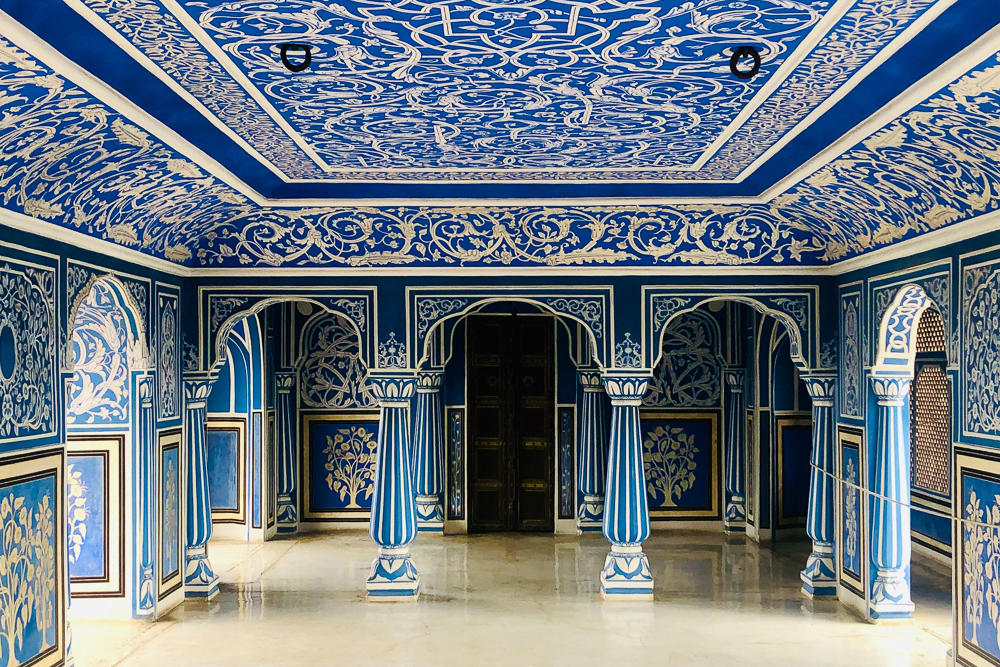
City Palace
One of most significant landmarks and popular places to visit in Jaipur is the City Palace. It leaves visitors speechless because of how truly amazing it is.
The City Palace lies right in the heart of the Old City and consists of a series of beautiful courtyards, gardens, temples, museums, and buildings. Constructed between 1729 and 1732, the palace reflects both Rajput and Mughal architecture.
It served as a residence for the former Maharaja of Jaipur. Today, a part of the palace is occupied by Padmanabh Singh and his family.
The palace is open between 9.30am and 5pm and has an entrance fee of 700 rupees for foreigners or 300 rupees for Indians if you opt for the composite ticket. Alternatively you can participate in a tour of the secret rooms.
For 2,000 rupees you can take the condensed Royal Grandeur tour, or for 3,500 rupees you can take the Royal Splendour tour. Both tours allow you exclusive access to private rooms with a guide, and tickets are 500 rupees cheaper for Indians.
Your student ID card will actually come in handy here because you’ll receive a discount upon presenting it. It’s recommended to spend two to three hours here so you can soak in all of the facts and sites.
As a whole, City Palace is marvellous. It’s the perfect visit for those who love art, history, and beautiful buildings. If you want to avoid the crowds then make sure to visit early in the day so you can get your Insta-worthy photos!
Contribution by Disha Discovers.
Amber Fort
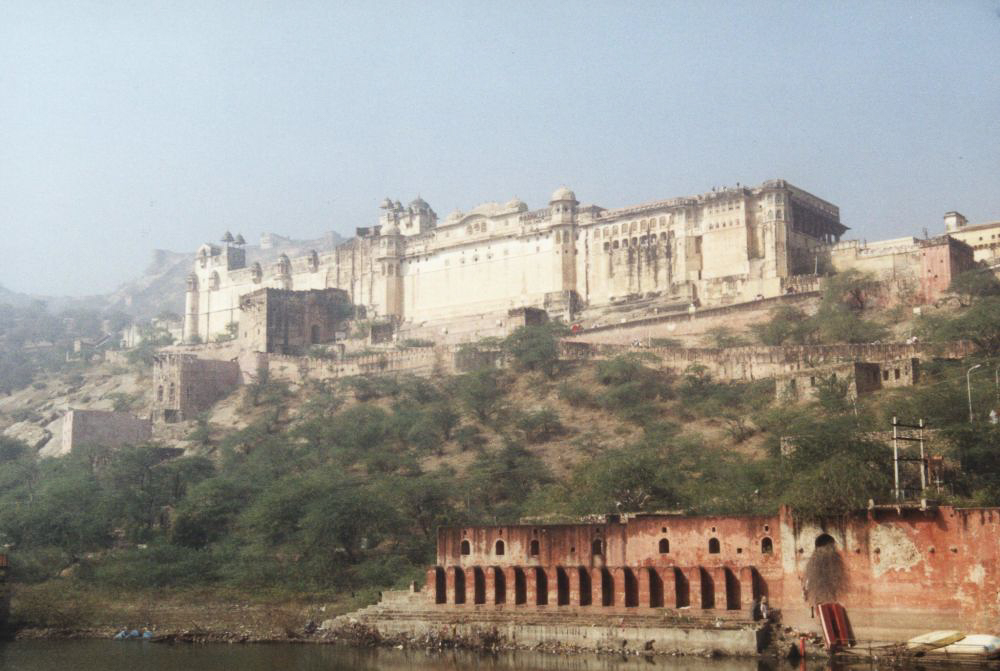
This sprawling fort and palace, also known as Amer Fort, is one of the most famous forts in Rajasthan and should not be missed. Originally built by Raja Man Singh, the Kachwaha King of Amer, it was the ruling base of the Kachwahas for several generations until Jai Singh II moved the capital to Jaipur, which he named after himself.
Some of the most impressive sights within Amber Fort are the mirror-covered Sheesh Mahal and the public audience hall known as the Diwan-i-Aam.
Amber Fort is located about 11 kilometres north of the city centre. The cheapest way to get there is by taking the local city bus No. 5, which runs every 10 minutes or so and connects Amber Fort with Hawa Mahal and the New Gate.
Most foreign visitors, however, choose to take a tuk-tuk instead. You can hire one for a whole day, including a trip to Amber Fort, for about 350 rupees.
Keep in mind that it’s a bit of a hike uphill to the fort entrance. Please be an elephant-friendly tourist and resist the urge to ride an elephant up the hill, as the animals are cruelly treated in order to tame them to the point where they will let tourists ride them.
For foreigners, entry to just Amber Fort costs 1,000 rupees. Better value is the composite ticket for 1,500 rupees, which is valid for two days and includes seven other attractions, including the Jantar-Mantar and Hawa Mahal.
Contribution by Wendy Werneth of The Nomadic Vegan.
Panna Meena Kund Stepwell
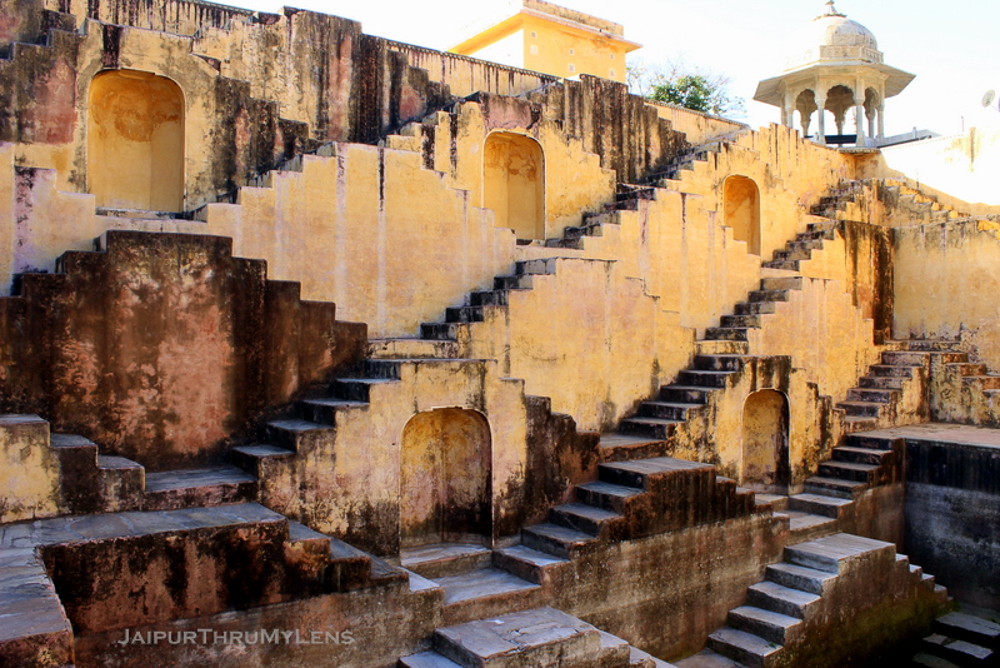
Panna Meena Kund is a stepwell in Amer dating back to the 16th century. The stepwell, which is called Baori amongst locals, has shot to fame in the last 2-3 years after being renovated.
In recent times it has become a must-visit place for Instagrammers and bloggers. Why so? The symmetric steps offer a superb photographic opportunity. Until a few years ago, one could walk down to the water level but due to recent suicides the entry is closed.
Detailed information about the stepwell’s history is unavailable. As per legend, it was built by a eunuch in the court of Amer called Panna Miah and therefore it is named after him.
In a semi-arid region, these Baoris provided a water source for an entire year. Baoris were designed to collect rainwater to be used by people for drinking, washing clothes, bathing, etc.
Located near Ambikeshwar Mahadev Temple in Amer, Jaipur, the Panna Meena Kund Stepwell is open from 8am to 5.30pm. It’s just a short distance from Amber Fort, so it’s a good idea to combine both attractions into a single trip!
Contribution by Arv from Jaipur Thru My Lens.
Hawa Mahal
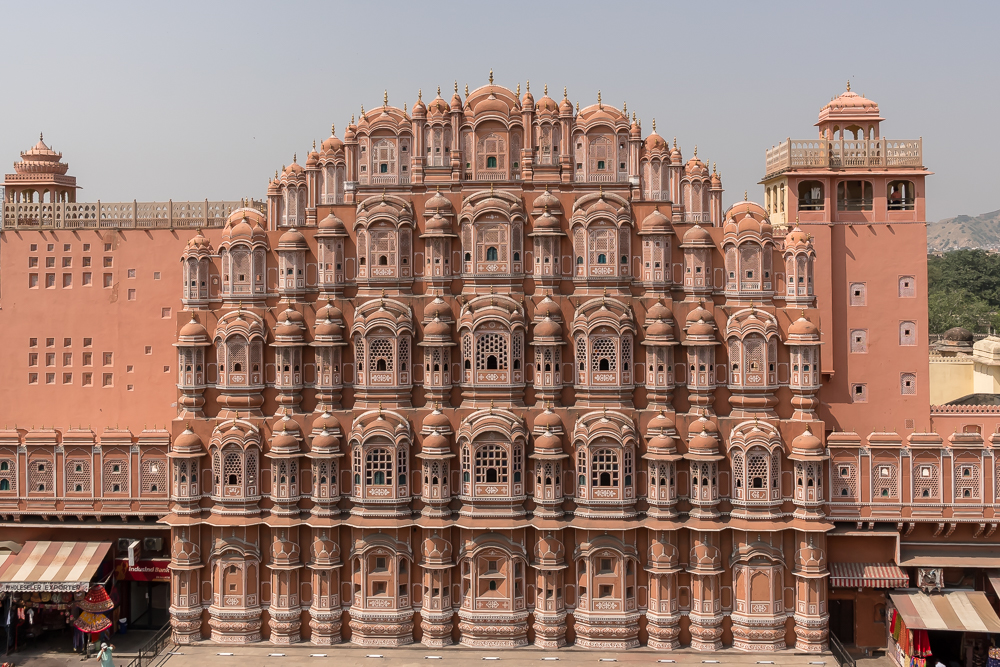
Hawa Mahal is one of the most beautiful palaces in India, making it one of the best places to visit in Jaipur. It’s made entirely from red and pink sandstone, and dates back to the end of the 18th century.
Completed in 1799, the Hawa Mahal was built by Maharaja Sawai Pratap Singh – the grandson of the founder of Jaipur, namely the great Maharaja Sawai Jai Singh. The palace’s exterior five floors resemble the honeycomb of a beehive.
In total, there are 953 windows in Hawa Mahal, and according to the legend, these windows were the only glimpses the women from the Maharaja’s harem could see over the city from the palace.
It has such a unique architecture that visitors can admire from distance and on the inside. Designed by Lal Chand Ustad, the palace is a fusion of Hindu Rajput and Islamic Mughal architecture.
The Hawa Mahal is known in English as ‘The Palace of Winds’ or ‘The Palace of Breeze’ due to the breeze which flows through the palace’s windows to help keep it cool.
Hawa Mahal is open from 9.30am to 5pm and has an entrance fee of 200 rupees for foreigners or 50 rupees for Indians. The best time to visit is in the morning, when the rooms will be illuminated by the golden sun that shines through the palace’s hundreds of windows.
Contribution by Alex Waltner at Swedish Nomad.
Naharagarh Fort
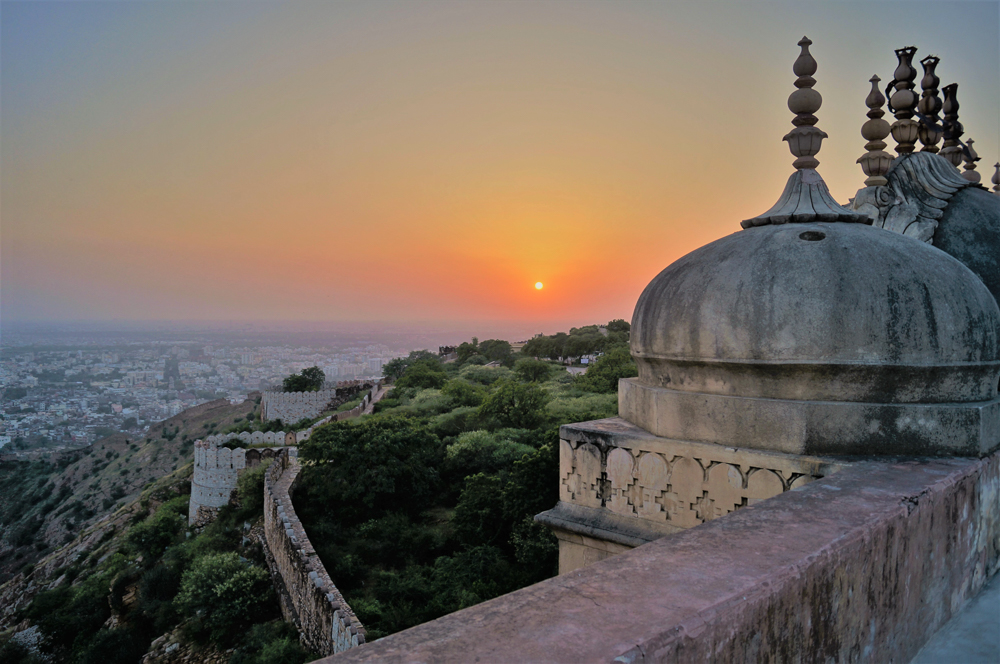
Naharagarh Fort stands proud on the Aravalli Hills and is just a 40 minute tuk-tuk ride out of the city of Jaipur and is one of the best places to visit here. Along with Amer Fort and Jaigarh Fort, Nahargarh once formed a strong defence ring for the city.
Entry is 50 rupees for Indian nationals or 200 rupees for foreigners. If you’re visiting India with kids, under 12s are free. Once inside, follow the arrows along, up and around all the narrow corridors and stairways, until you arrive at the rooftop.
You really only need an hour maximum as there is little to actually see inside. The main reason to visit is for the epic sunset view from rooftop, which is perhaps one of the best in all of India. Ensure you arrive well before closing time – the fort officially opens at 9am and closes at 5.30pm.
Don’t expect to stay on the rooftop long enough to watch the sun dip below the horizon; officious guards will usher you on with severe whistles. Head back out of the Palace doors and make a bee line to Sunset Point (it’s a 2 minute walk), where you can watch the last of the sun’s rays disappear behind the compacted rooftops of the Pink City.
There’s an open air food court for dinner and a couple of restaurants within the grounds, so it’s worthwhile hanging around for dinner. You will also find a wax museum; this incurs an additional fee.
Top tip: make sure you arrange for your tuk-tuk driver to wait for you as there is no ‘taxi service’ available to take you back down to the city.
Contribution by TraveLynn Family.
Jal Mahal
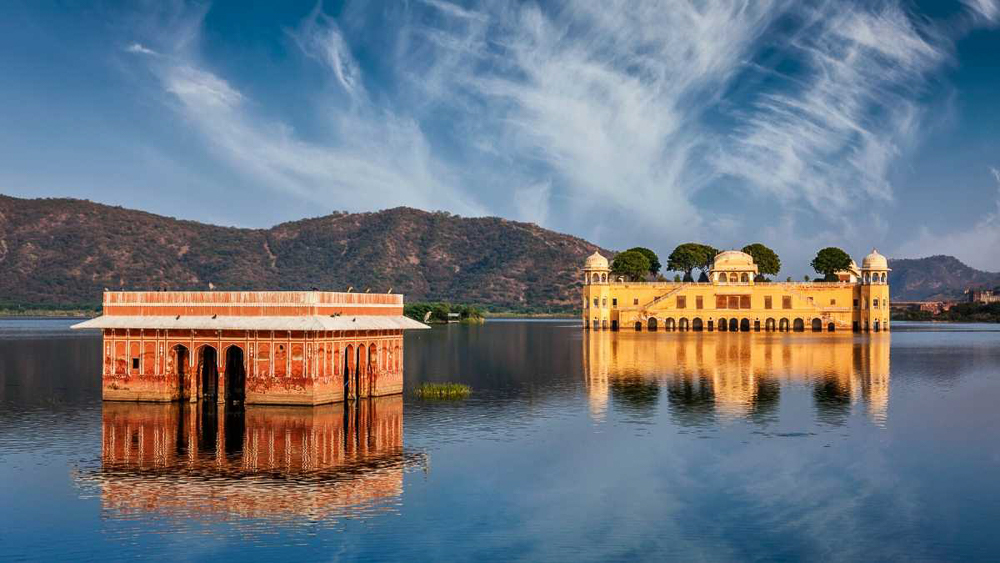
Any tour of India’s Golden Triangle will undoubtedly include a visit to Jaipur, and one of the best things to do there is visit Jal Mahal, also known as the Water Palace. It’s a gorgeous structure that was built in the 18th century by Maharaja Jai Singh II, ruler of Amer at the time.
It sits in the middle of Man Sagar Lake, a manmade reservoir that was dug to deal with prevailing draughts in the region. Jal Mahal is a gorgeous five-story palace, but four levels are submerged underwater when the lake is full.
The Water Palace is found on the road between Amer and Jaipur, so most visitors stop along the way to tour Amber Fort. Because so many visitors stop to take photos, a walkway with outcroppings lines the road-side of the lake.
There are many street vendors and market stalls lining the road. Otherwise, there isn’t much to do in the area besides gaze at the beautiful palace and take photographs. Jal Mahal remains one of the most visited and photographed sites in Jaipur even though you can only view it from the banks of Man Sagar Lake.
Contribution by Derek and Mike at Robe Trotting.
Patrika Gate
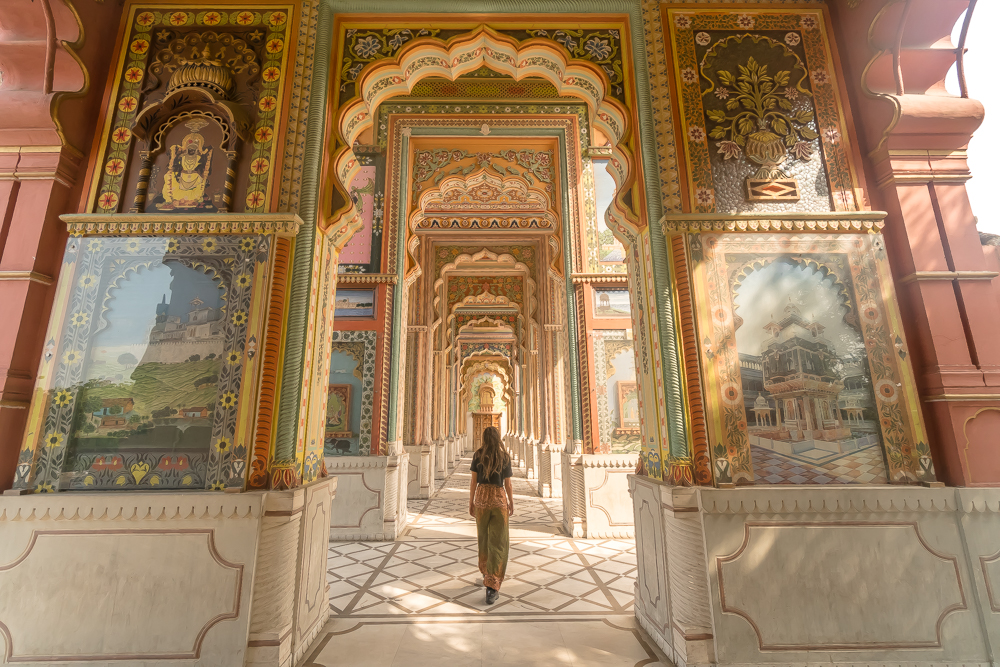
Alongside the City Palace and Amber Fort, one of the best places to visit in Jaipur is the Patrika Gate. While its location is quite far from the city centre, near the airport, it’s worth the journey.
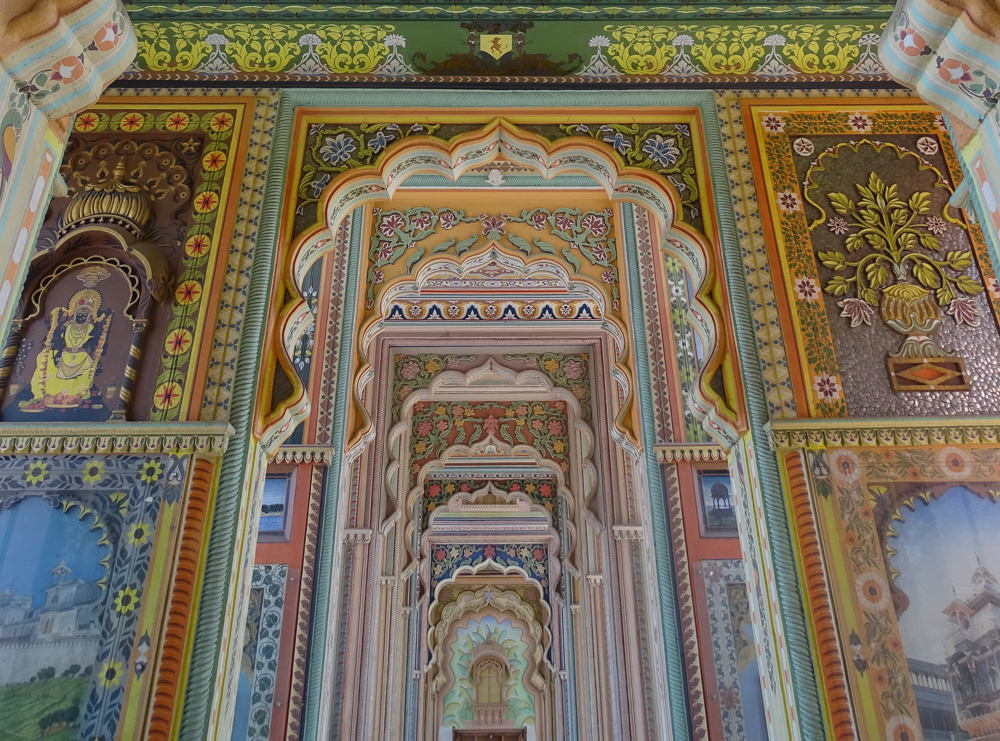
As you wander between the dramatic archways adorned with colourful and ornate artwork, you’ll be mentally transported back to days of royalty and decadent palaces.
There are seven gates dotted around the walled city but the Patrika Gate is known as the most attractive. While admiring the artwork you will learn about the city’s history and spy portraits of Jaipur’s other famous buildings including the Jal Mahal and Hawa Mahal.
Patrika Gate is free to visit and doesn’t take long to explore. The exterior of the building painted in Jaipur pink is not nearly as attractive as the interior, which is the real highlight. Visit early otherwise Patrika Gate can be full of photographers and tourists snapping photos inside.
Find Patrika Gate within the Jawahar Circle, a lush green island of calm in otherwise busy Jaipur. The best way to get to Patrika Gate is to hire a local tuk-tuk driver. You can arrange a rate by haggling.
Whether you visit Patrika Gate by itself or as part of a day tour, it’s one of the city’s must visit Instagram hotspots!
Contribution by Where Goes Rose.
Jaigarh Fort
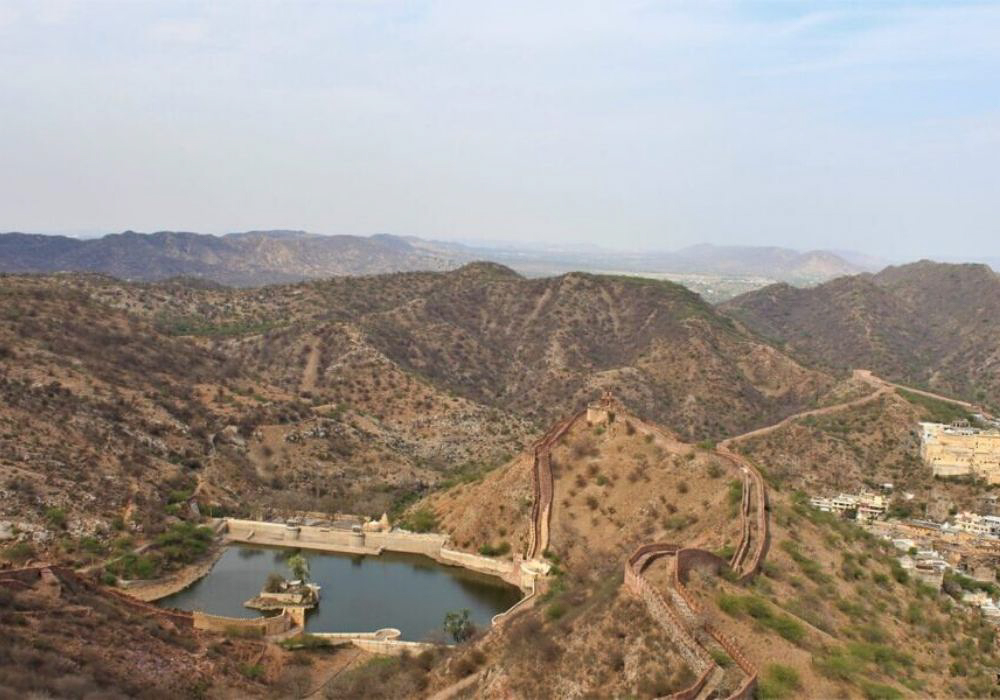
Built on the hill known as Cheel ka Teela (Hill of Eagles) at the top of Aravalli ranges, Jaigarh Fort was built by Jai Singh II for the safety of Amber Fort from the enemies.
There’s a secret tunnel at Jaigarh Fort that leads to Amber Palace making it one of the most protective forts in India. Jaigarh Fort literally translates to the Victory Fort. Rightfully, It remains unconquered.
Jaigarh Fort affords a breathtaking panoramic view over the city. The vistas showcasing the Amer, Sagar Lake and Aravali hills are out-of-this-world.
The fort houses a Weaponry, a Cannon Foundry, hall of the warriors (Shubhat Niwas), but perhaps the most striking part is the Jaivana, the world’s largest cannon on wheels.
Jaigarh Fort’s palace complex includes Laxmi Vilas, Aram Mandir, Lalit Mandir, and the Vilas Mandir. Some of the rooms inside like suites of kings and queens, the dining hall, and the kitchen area are closed for public entry. Why?
Well, because of tourists who don’t think twice before damaging the rich heritage. Yes, the government closed the part of the fort because visitors have damaged the beautiful paintings and carvings in those areas.
An uphill drive to the fort from the Jaipur city centre, a distance of around 10 kilometres, is as beautiful as the fort. If you don’t have a car, you can hire a taxi or tuk-tuk to reach the fort. The adventure lovers can even climb a steep hill track from the Amer Fort to reach the Jaigarh Fort.
Jaigarh Fort opens every day from 9am to 4.30pm. The entry fee is 35 rupees for Indian nationals and 85 rupees for foreign nationals. There are separate charges for photography. You can carry a still camera by paying 50 rupees and a video camera for 200 rupees.
Contribution by Travel Melodies.
Jantar Mantar Observatory
Jantar Mantar is one of the best places to visit in Jaipur. One of the four World Heritage Sites in Rajasthan, Jantar Mantar is a 19th century observatory complex.
Built by the scientifically-minded Maharaja Jai Singh II, Jantar Mantar contains all sorts of instruments built on a grand scale. The largest of these is an enormous sundial, the world’s largest, standing 27 metres high. It displays the time with incredible accuracy, down to a very precise two seconds.
The giant sundial’s shadow travels at about 1 millimetre per second, meaning that it entirely crosses your hand in about a minute – a surprisingly fascinating thing to watch!
Inside the complex you’ll also find other instruments for charting positions of the sun, moon and stars, tracking changes in season, calculating eclipses, and even a rudimentary sort of world clock.
All of the instruments are built from local stone and marble, and many are brightly painted too, making the complex visually appealing. Even for the less scientifically-inclined, Jantar Mantar is a really interesting place to wander around and see how Indian scientists and mathematicians solved the problems that faced their world.
Jantar Mantar is easily accessible in central Jaipur, adjacent to the Hawa Mahal and the larger Palace complex. Tickets are available at the gate, costing 200 rupees for foreigners or 50 rupees for locals.
Contribution by World Heritage Journey.
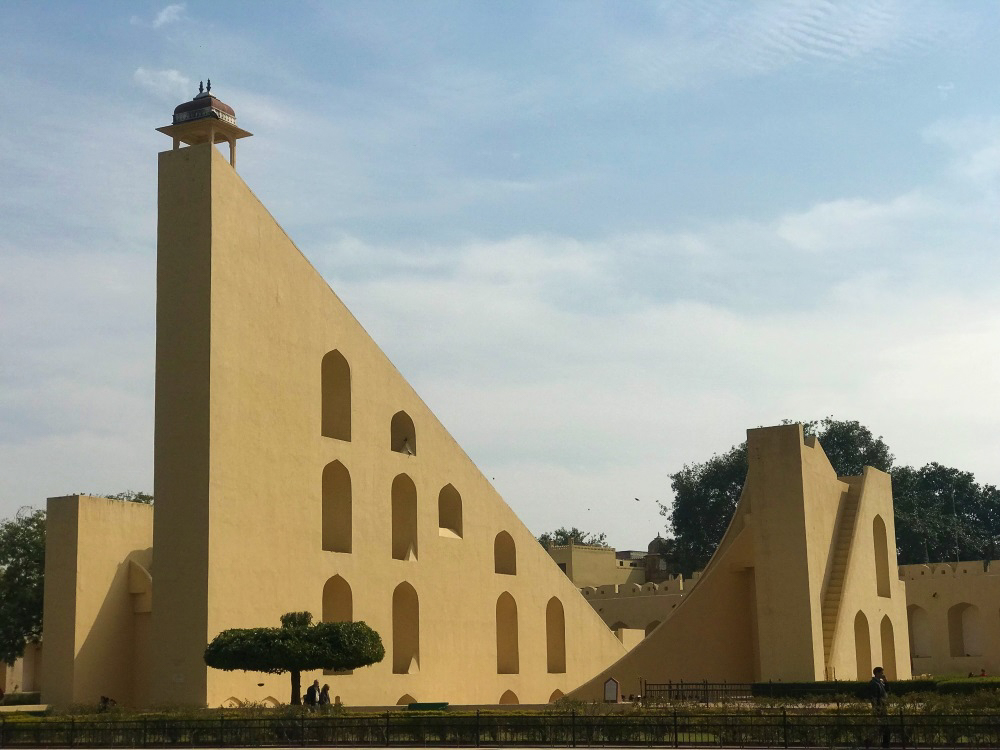
Gaitore Cenotaphs
The Gaitore cenotaphs are within driving distance from the centre of Jaipur, and despite their beauty see few visitors. Far away from the crowds this is a peaceful and serene spot, fitting its purpose as the cremation grounds of the Rajput Kings in the 18th century.
The architecture of the royal tombs is as beautiful as the more popular attractions in Jaipur. White marble and sandstone structures look like small palaces with their umbrella shaped domes and ornate towers. You will see the Mughal influence clearly, yet the complex also has its own characteristics.
More beauty lies in the details of the decorated walls and interiors. Each cenotaph resembled the preferences of the king and each one of them is unique.
The intricate carvings of deities, peacocks and depictions of battle scenes tell hundreds of stories. There used to be paintings as well and if you look closely some traces are still there.
Situated 16 kilometres from the city on the Jaipur to Ajmer road, the cenotaphs have a somewhat isolated location. If you don’t have your own transport it’s best to take a tuk-tuk or taxi.
The Gaitore cenotaphs are open from 10am to 5pm every day, with entrance costing just 30 rupees.
Contribution by Backpack Adventures.
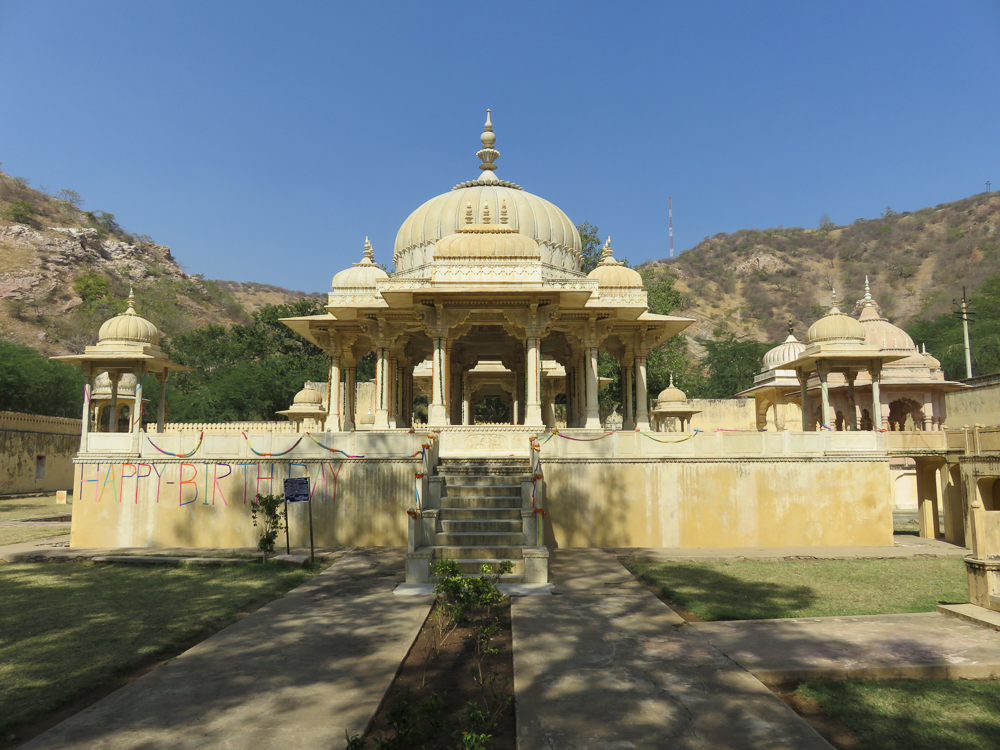
Galta Ji
Galta Ji Temple is actually a small complex most notable for the series of seven water tanks (kunds) built into a crevice in the hillside. They are fed by natural springs and the lower Galta Kund, the holiest of all of the tanks, is believed to never go dry. The baths are considered holy by Hindus, and pilgrims frequently bathe in the tanks.
A short walk up the steep path that runs alongside the tanks is a small temple called the Sun Temple (Surya Mandir) because it is dedicated to the Sun God. It is common to be given a blessing here, though be warned that you will be expected to pay for the blessing after it is given. There are great views over Jaipur from the temple.
Galta Ji is more commonly called the Monkey Temple, named after the many macaque monkeys that hang around it. Locals referring to themselves as the “Monkey King” will offer to show you around and help you feed the monkeys in exchange for a tip, but it’s best not to feed wild animals so avoid doing this!
The temple, which is about ten kilometres outside of Jaipur, is most easily reached by taxi or tuk-tuk and a great place to visit. It’s best to arrange for the driver to wait while you visit the temple so that you don’t need to try and find another taxi/tuk-tuk for the return trip. There is a small entrance fee of 200 rupees, plus an additional fee to take photos.
Galta Ji is not the cleanest temple in India – it’s a little shabby and litter is not cleaned up. That being said, it’s beautiful and unique, and with the added bonus of the monkeys it’s definitely worth a visit!
Contribution by James Ian at Travel Collecting.
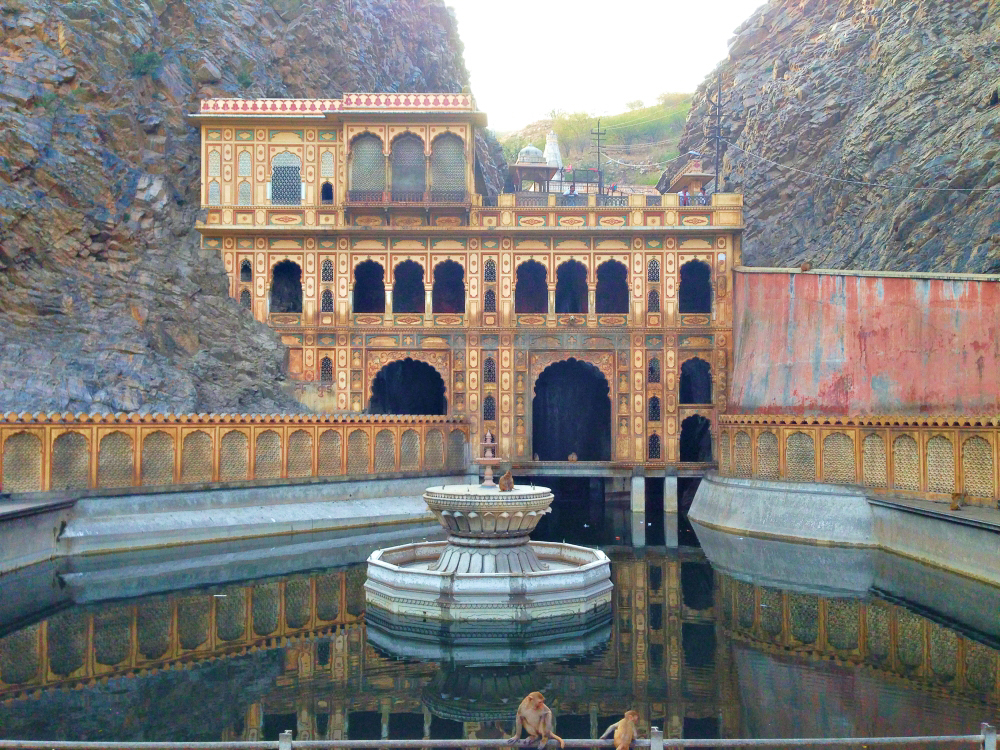
How to get to Jaipur
As the capital city of Rajasthan, Jaipur has good transport connections with other cities within the state and around the country. Generally speaking though the easiest ways to get to the city are either by plane, train or taxi.
The best option for you depends on where you’re coming from. If you’re travelling internationally or from another state then it may be easiest to fly into Jaipur International Airport, which is located around 10 kilometres from the city centre.
If you’re coming from a nearby city then it’s often easier and cheaper to take the train to Jaipur. You can find train schedules on the on 12GoAsia website.
Another option is to take a taxi to Jaipur, but this will normally work out as more expensive than the train despite the journey being a similar length of time. For more information on how to get to Jaipur we recommend reading our guides at the links below:
How to get between Udaipur and Jaipur! How to get between Jaisalmer and Jaipur!
How to get between Jodhpur and Jaipur!
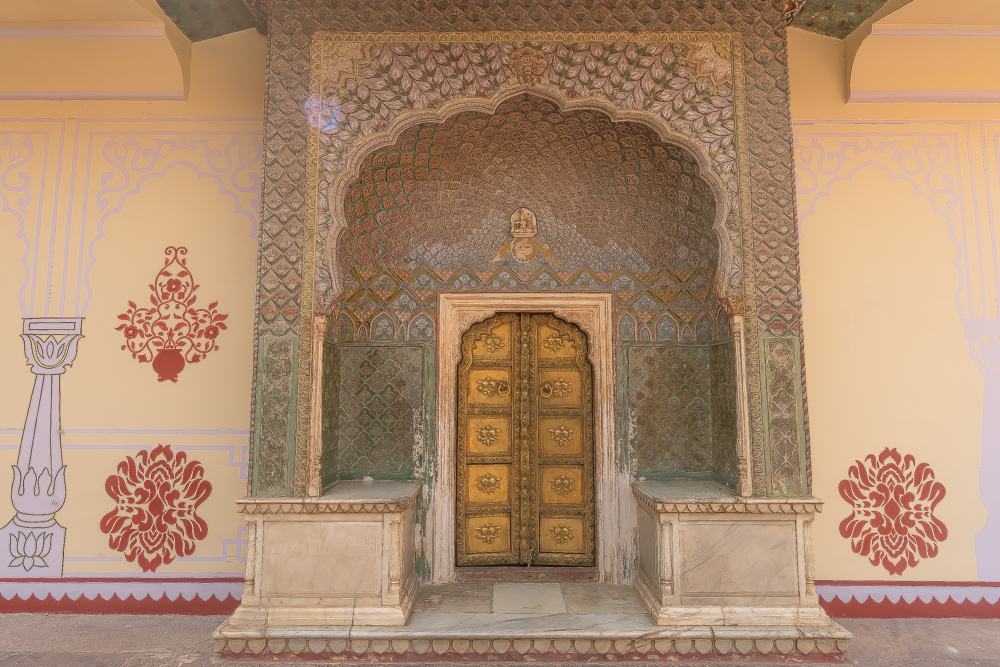
Best time to visit Jaipur
The best time to visit Jaipur is between October and March, as temperatures in the city are most pleasant during these months. By visiting during this period you avoid the hottest months as well as the monsoon season.
Between April and June temperatures in Jaipur reach highs in excess of 40 degrees Celsius. It’s hard to explore the city in such intense heat, so it’s best to avoid visiting during these months.
Monsoon season in Jaipur and Rajasthan runs from July to September, so it’s best to avoid these months too. Although it won’t rain constantly there is a chance the weather will affect your stay, so it’s best to visit between October and March.
Where to stay in Jaipur
Budget
Trimrooms Mount Blue
If you’re looking for a good quality budget hotel in Jaipur then look no further than the Trimrooms Mount Blue Hotel. Despite the low price, rooms at the hotel are spacious and modern, as well as being fitted with air conditioning and a flat-screen TV with satellite channels.
The hotel is just a 10-minute drive away from Jaipur’s City Palace, which means you can easily get a tuk-tuk into the Pink City to see the sights. Not only that, but the hotel is within walking distance of Man Sagar Lake where you can enjoy views of the stunning Jal Mahal Palace.
Click here to take a look at the great value Trimrooms Mount Blue Hotel on Booking.com!
Mid Range
Dera Rawatsar
Dera Rawatsar is one of the best value heritage hotels in Jaipur. Situated just outside the famous Pink City, this boutique hotel offers comfortable rooms with heritage decor, a lovely outdoor swimming pool and more.
Rooms at the property are air conditioned and come with cable TV, and the staff are very friendly. There’s also a brilliant restaurant on site, serving a variety of delicious local cuisine alongside some international dishes.
Click here to arrange a stay at the Dera Rawatsar Heritage Hotel on Booking.com!
Treat Yourself!
Samode Haveli
Samode Haveli is one of the top heritage hotels in Jaipur. Built over 175 years ago as a royal family manor, the hotel boasts wonderful architecture, luxurious rooms and a large outdoor pool.
Rooms at the property are elegant and beautifully designed, complete with air conditioning, a sofa, a mini bar and more. The hotel is well-located around a 10-minute drive from the City Palace and Hawa Mahal, and also has a restaurant on site for your convenience.
Click here to book a stay at the wonderful Samode Haveli on Booking.com!
Alternatively, VRBO have some fantastic accommodation options if you want to rent a property instead of staying at a hotel! Click here to see the amazing options on the VRBO website!
Please note that some links in this article are affiliate links, which means if you make a purchase we make a small commission at no extra cost to you. This money is used to support this website and cover the costs of keeping it online and free to access!
Like this guide to the best places to visit in Jaipur, Rajasthan? Pin it!

